
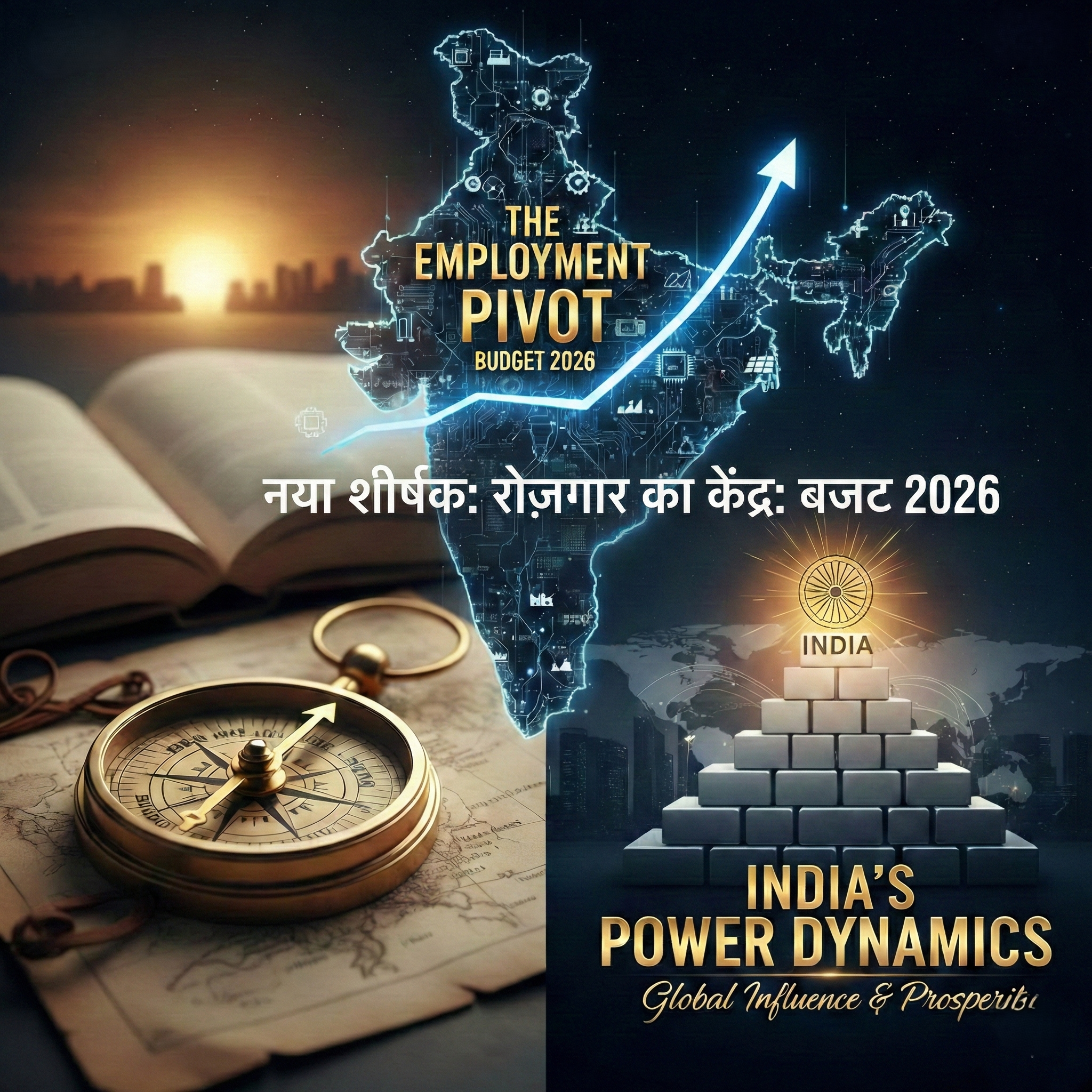
नया शीर्षक: रोज़गार का केंद्र: बजट 2026
इस रविवार को ‘कर्तव्य भवन’ की हवा में केवल वित्तीय शब्दावली ही नहीं थी। जब वित्त मंत्री निर्मला सीतारमण ने अपना लगातार नौवां केंद्रीय बजट पेश करने के लिए खड़ी हुईं, तो एक बात साफ़ थी: भले ही व्यापक आर्थिक संकेतक (macroeconomic indicators) सकारात्मक दिख रहे हों, लेकिन “खुशी” का असली एहसास तभी होता है जब हाथ में एक स्थायी नौकरी हो।
आज का शीर्षक—“सब ठीक है जब रोज़गार पास है”—उस राष्ट्र की मनोदशा को सटीक रूप से दर्शाता है जो अपनी जनसांख्यिकीय लाभांश (demographic dividend) को एक अवसर और चुनौती दोनों के रूप में देख रहा है। यहाँ विवरण दिया गया है कि कैसे “सीतारमण एंड कंपनी” पूंजी-गहन विकास (capital-intensive growth) से हटकर श्रम-गहन समृद्धि (labor-intensive prosperity) की ओर शक्ति स्थानांतरित करने का प्रयास कर रही है।
1. “ऑरेंज इकोनॉमी”: करियर के रूप में रचनात्मकता
एक चौंकाने वाले कदम में, बजट ने ऑरेंज इकोनॉमी—यानी संस्कृति, रचनात्मक कला और तकनीक के मिलन—पर ज़ोर दिया है।
लक्ष्य: 2030 तक एनीमेशन, विजुअल इफेक्ट्स, गेमिंग और कॉमिक्स (AVGC) क्षेत्र में अनुमानित 20 लाख पेशेवरों की आवश्यकता को पूरा करना।
शक्ति का बदलाव: 15,000 स्कूलों और 500 कॉलेजों में ‘क्रिएटर लैब्स’ स्थापित करके, सरकार पारंपरिक करियर रास्तों से हटकर युवाओं को वैश्विक स्तर पर अपनी रचनात्मकता से कमाई करने के लिए सशक्त बना रही है।
2. मैन्युफैक्चरिंग 2.0: केवल असेंबली लाइन से आगे
बजट ने न केवल मौजूदा PLI योजनाओं को दोगुना किया, बल्कि उन्हें और उन्नत बनाया। बायोफार्मा शक्ति और ISM 2.0 (इंडिया सेमीकंडक्टर मिशन) की शुरुआत के साथ, ध्यान अब उच्च-मूल्य वाले विनिर्माण पर केंद्रित हो गया है।
प्रभाव: ये केवल कारखाने की नौकरियां नहीं हैं; ये R&D, उपकरण रखरखाव और नैदानिक परीक्षणों (clinical trials) में उच्च-कौशल वाली भूमिकाएं हैं।
MSME ग्रोथ फंड: एक नया ₹10,000 करोड़ का फंड छोटे व्यवसायों को वैश्विक व्यापार की उथल-पुथल से बचाने और उन्हें रोज़गार का मुख्य आधार बनाए रखने के लिए बनाया गया है।
3. शिक्षा से रोज़गार (E2E) के बीच की दूरी को पाटना
शायद सबसे रणनीतिक कदम E2E स्टैंडर्ड कमेटी का गठन था।
मिशन: यह सुनिश्चित करना कि क्लासरूम में जो सिखाया जा रहा है, वह वास्तव में ऑफिस या लैब की नौकरी में काम आए।
सेवा क्षेत्र को बढ़ावा: 2047 तक वैश्विक सेवा निर्यात में 10% हिस्सेदारी के लक्ष्य के साथ, सरकार IT से आगे बढ़कर स्वास्थ्य और उच्च-स्तरीय परामर्श जैसे क्षेत्रों में विविधता ला रही है।
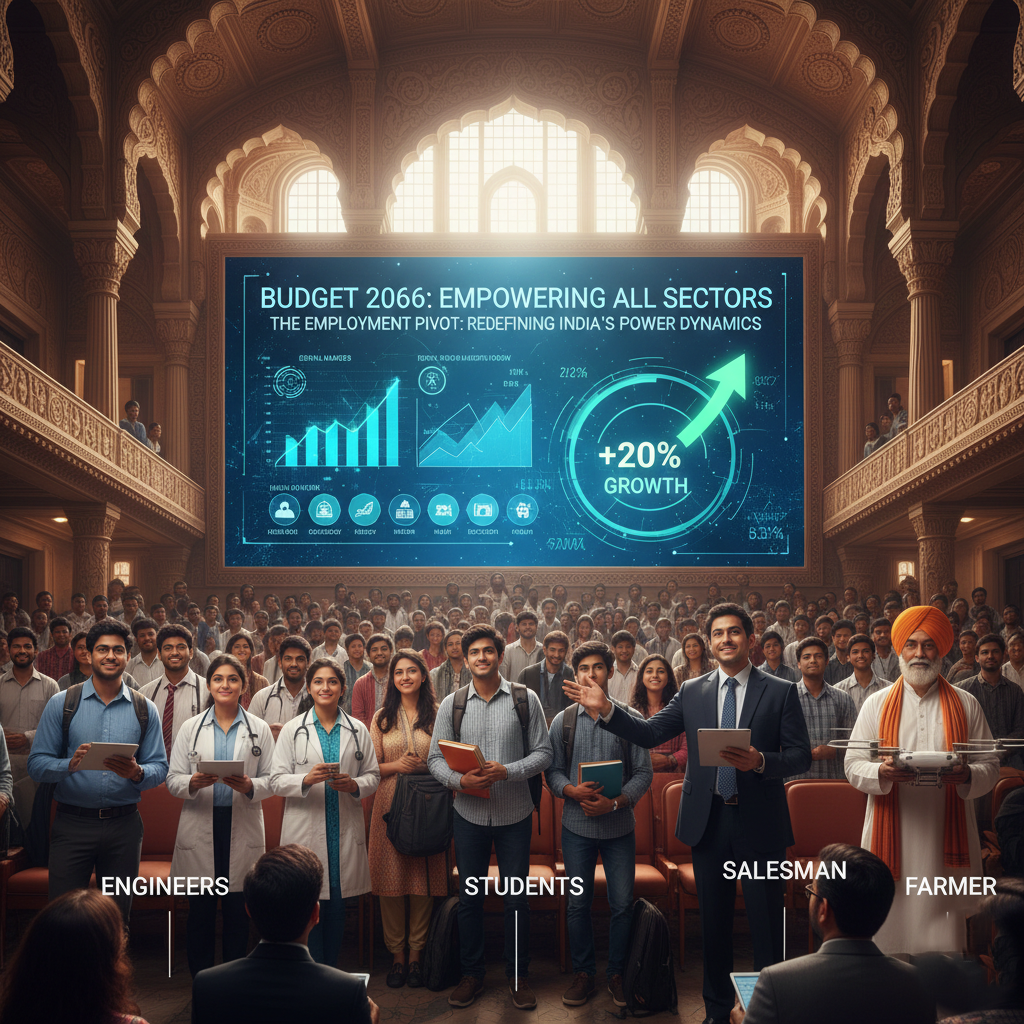
4. ग्रामीण शक्ति: खेतों से उद्यमों तक
कृषि अब भी सबसे बड़ा नियोक्ता है, लेकिन बजट मानता है कि यह ग्रामीण भारत में एकमात्र विकल्प नहीं हो सकता।
विकसित भारत रोज़गार और आजीविका मिशन (VB-GRAM G): नरेगा (MGNREGA) का कायाकल्प करते हुए इसे स्थायी संपत्ति निर्माण और आजीविका मिशन में बदला गया है।
SHE-मार्ट्स: ग्रामीण महिलाओं को सशक्त बनाने के लिए, ये मार्ट्स महिला नेतृत्व वाले उद्यमों को सहायता देंगे, जिससे वे “कर्ज लेने वाले” से “व्यवसाय के मालिक” बन सकेंगी।
5. इन्फ्रास्ट्रक्चर का प्रभाव
सरकार सड़कों, बंदरगाहों और रेलवे के वित्तपोषण के लिए ₹12.2 लाख करोड़ के पूंजीगत व्यय (Capex) के साथ अपना निवेश जारी रखे हुए है।
“इन्फ्रास्ट्रक्चर का मतलब सिर्फ कंक्रीट नहीं है; यह लॉजिस्टिक्स की नौकरियों, आतिथ्य सत्कार (hospitality) की मांग और हर नए राजमार्ग के साथ पनपने वाले छोटे व्यवसायों के बारे में है।”
निष्कर्ष: क्या वाकई शक्ति का संतुलन बदलेगा?
बजट 2026 एक सोचा-समझा दांव है। यह इस उम्मीद पर टिका है कि ग्रीन एनर्जी और क्रिएटिव इकोनॉमी जैसे “सनराइज सेक्टर” को बढ़ावा देकर सरकार “बिना रोज़गार वाले विकास” की कहानी को बदल सकती है।
English Translate:
A New Blueprint: Redefining Indian Economic Power Through Jobs in 2026
The air in Kartavya Bhawan was thick with more than just the usual fiscal jargon this Sunday. As Finance Minister Nirmala Sitharaman rose to present her ninth consecutive Union Budget, the subtext was clear: while the macroeconomic indicators are flashing green, the “feel-good” factor only truly arrives when it’s accompanied by a steady paycheck.
The title of the hour—“All’s well when jobs are there”—perfectly captures the mood of a nation navigating a demographic dividend that is as much a challenge as it is an opportunity. Here’s a breakdown of how “Sitharaman & Co.” are attempting to shift the power from capital-intensive growth to labor-intensive prosperity.
1. The “Orange Economy”: Creativity as a Career
In a surprise move, the Budget pivoted hard toward the Orange Economy—the intersection of culture, creative arts, and technology.
The Goal: To tap into the $2$ million professional requirement projected for the Animation, Visual Effects, Gaming, and Comics (AVGC) sector by 2030.
The Power Shift: By setting up creator labs in 15,000 schools and 500 colleges, the government is moving away from traditional “engineer-or-doctor” career paths, empowering the youth to monetize creativity on a global scale.
2. Manufacturing 2.0: Beyond the Assembly Line
The Budget didn’t just double down on existing PLI schemes; it evolved them. With the launch of Biopharma SHAKTI and ISM 2.0 (India Semiconductor Mission), the focus has shifted to high-value manufacturing.
The Impact: These aren’t just factory jobs; they are high-skill roles in R&D, equipment maintenance, and clinical trials.
MSME Growth Fund: A new ₹10,000 crore fund aims to “tariff-proof” small businesses, ensuring that the backbone of Indian employment isn’t crushed by global trade volatility.
3. Bridging the “Education to Employment” (E2E) Gap
Perhaps the most strategic move was the creation of the E2E Standard Committee.
The Mission: To ensure that what is taught in the classroom actually translates to a seat in an office or a lab.
Services Push: With a target of 10% share in global services exports by 2047, the government is looking to diversify beyond IT, into “allied health” and high-end consultancy, aiming to add 100,000 health professionals in five years.
4. Rural Power: From Fields to Enterprises
Agriculture remains the largest employer, but the Budget recognizes it can no longer be the only employer in rural India.
VB-GRAM G: The rebranding and overhaul of the rural employment guarantee (formerly MGNREGA) into the Viksit Bharat Guarantee for Employment and Livelihood Mission marks a shift toward building permanent assets rather than just providing temporary relief.
SHE-Marts: To shift power to rural women, these marts will support women-led enterprises, moving them from “credit-seekers” to “business owners.”
5. The Infrastructure Multiplier
The government continues to do the “heavy lifting” with a massive ₹17.2 lakh crore market borrowing plan to fund roads, ports, and railways.
“Infrastructure isn’t just about concrete; it’s about the logistics jobs, the hospitality demand, and the small businesses that sprout along every new highway.”
The Verdict: Can the Power Truly Shift?
Budget 2026 is a calculated bet. It bets that by fostering “sunrise sectors” like green energy and the creative economy, while shielding MSMEs from global shocks, the government can turn the “jobless growth” narrative on its head.
The shift in power is intended to be two-fold:
Economic: Moving from a consumption-led to a productivity-led economy.
Social: Empowering the youth and rural workforce with specialized skills rather than just general labor.